-
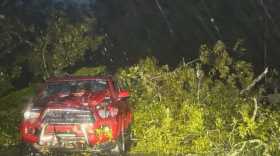 Hurricane Isaias made landfall just outside of Pensacola on Friday. After reaching major hurricane status, the cyclone weakened before landfall.
 -
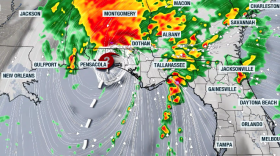 Damaging winds, tornadoes, and flash flood risk will continue throughout the weekend across the Southeast into the Mid-Atlantic.
 -
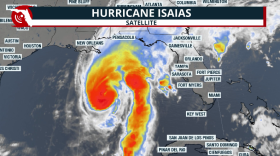 Numerous damaging tornadoes are possible even after the hurricane moves inland and weakens; the heavy rains will continue throughout Saturday morning across the Florida Panhandle. (Version in Spanish here, too)
 -
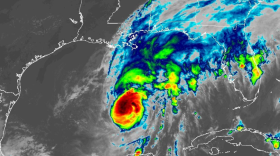 Landfalling tropical systems have a history of producing tornadoes, but the atmospheric ingredients around Hurricane Isaias appear conducive for supercells and tornadoes across northern Florida.
 -
 Isaias strengthened into a Category 3 hurricane on Friday and is expected to make landfall near Pensacola by Saturday morning.
 -
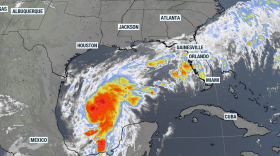 Tropical Storm Isaias is expected strengthen into a Category 2 hurricane on Friday. The cyclone is headed towards the northern Gulf but moisture will impact much of Florida.
 -
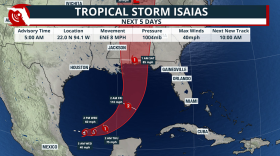 Florida faces continued heavy rain and flooding concerns as the strengthening tropical system moves toward the northern Gulf Coast, with landfall possible late Friday or early Saturday.
 -
 A strengthening El Niño could bring Florida a wetter, cloudier and stormier dry season. Here is why the risk of flooding, squall lines and tornadoes typically increases—especially across Central and South Florida.
 -
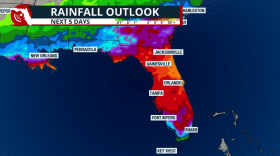 Gradual development is possible this week, but it will likely take the whole week for anything to develop. Rain across Florida this week is due to a front and local effects.
 -
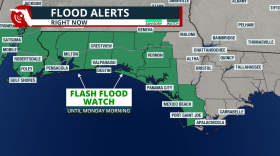 Tropical downpours are expected this weekend across the western Florida Panhandle. Local flash flooding will be possible

© 2026 | WUWF Public Media
11000 University Parkway
Pensacola, FL 32514
850 474-2787
11000 University Parkway
Pensacola, FL 32514
850 474-2787
Play Live Radio
Next Up:
0:00
0:00
Available On Air Stations


