

Florida is dry, and the season is not signaling hope as we move through the driest months of the year. The Biscayne Aquifer levels are drastically low. To help conserve water, South Florida residents, particularly those in Miami-Dade, Collier, Glades, Highlands, Lee, and Monroe counties, are asked to reduce water use. Currently, there are no mandatory water restrictions, but voluntary water conservation limits lawn watering to twice a week on a rotating schedule in Miami-Dade and Monroe counties. It's not just the unsightly dry lawns that are an eyesore; when aquifer water levels are low, the risk of saltwater intrusion into freshwater supplies increases, exacerbating local problems and potentially bringing drinking water shortages. This is about it, as salt water enters through the porous limestone water table.

The Biscayne Aquifer is a shallow, highly permeable surficial aquifer covering over 4,000 square miles in southeastern Florida. It is found approximately 10 to 200 feet below ground level.
If you have walked through your neighborhoods, you must have noticed lakes with low water levels and most lawns already brown or without any grass. The drought has been worsening across Florida; this year, South Florida has a rain deficit. But the drought problem has been building for months. During the second half of October, South Florida was briefly drought-free, but that has quickly changed. Note that summer 2025 was a very dry season, with well below-average rainfall, placing several parts of southeastern Florida under severe drought multiple times.
Precipitation at Miami International Airport for 2025 | Average annual precipitation at MIA |
57.43 inches | 67.41 inches |


During the months of July and August, which tend to be one of the rainiest months of the year, South Florida lacked rain. We often had a high-pressure system to the southwest of Florida, giving us a west wind that prevented the usual easterly winds, which aid the numerous summer afternoon thunderstorms that often replenish the ground's water.

Looking ahead...
According to South Florida's climatology, the average rainfall for Miami in February and March is 2.15 inches and 2.46 inches, respectively. These are the 2nd and 4th driest months of the year. There alone, the odds are not in our favor for some drought improvement. Even if we received average rainfall, we would likely still face a drought. As we move into April, there tends to be more rain, and May comes with double the amount of average rainfall of April. The rainy season begins in late May, as humidity rises and temperatures increase, triggering sea breezes and bringing typical afternoon thunderstorms to the area. In the last few years, we have also experienced early-season storms and cyclones that have produced heavy precipitation. Of course, heavy precipitation is not beneficial, as it tends to cause major flooding rather than drought relief. The dry ground is so compacted that it doesn't allow drainage during heavy rains, causing dangerous flooding.
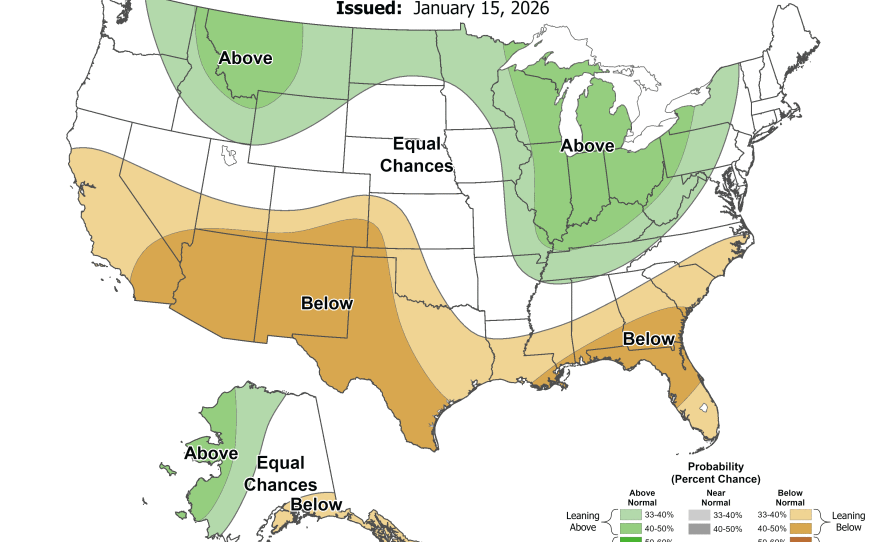
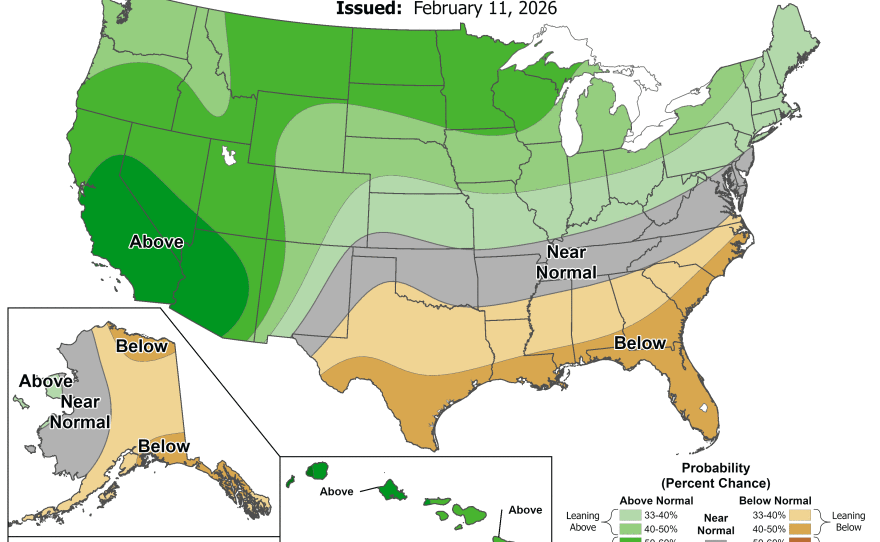
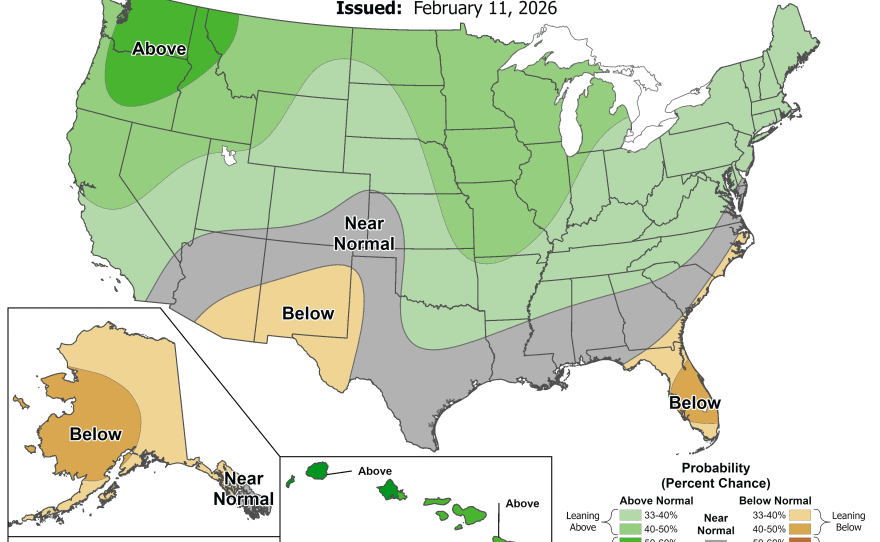
The next three months do not look promising. NOAA's Climate Prediction Center shows that there is a 33 to 44 percent chance of having below-average precipitation. This is typical of a La Niña winter, as Florida tends to have less than average precipitation.
Remember, below-average changes don't mean we won't receive numerous showers or even a heavy precipitation event. They could all happen, but even if one happens, we could still end up with below-average rainfall for the season, or at least a stretch that would likely hamper the chances for the drought to improve, which could also fill the Biscayne Aquifer.
Make sure you are conserving water. Mandated water restrictions could follow, with serious consequences for many more residents. Here are some tips to do your part in conserving water:
- Fix leaky faucets
- Take shorter showers
- Turn off the tap while brushing or shaving
- When cleaning, use a broom instead of water
- Water plants in the morning, instead of during the day
- Run he dishwater when it is full
- Run full loads of laundry
- Adjust the wash machine water levels.
