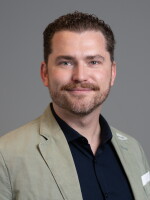
Jermaine J. Williams, a Pensacola-based behavioral health professional and filmmaker, has entered the 2026 race for mayor, adding to a field shaped by disputes over redevelopment, housing costs, homelessness, and public trust in City Hall.
Williams announced his candidacy in a campaign video that frames recent growth as disconnected from the people most affected by it. On his campaign website, Williams describes his platform as “people first,” arguing that growth should strengthen neighborhoods without forcing longtime residents out.
“Too many neighbors feel like Pensacola is being built around them and not with them,” Williams said. “Leadership starts by listening, by showing up, and putting people before profit.”
The field taking shape
Incumbent Mayor D.C. Reeves, elected in 2022, is seeking another term as the field expands.
Williams joins a growing roster of challengers, including former City Council President Ann Hill; Jasmine Brown, an organizer with the Party for Socialism and Liberation; and Alicia Trawick, a disaster-recovery and local-government consultant who is campaigning for a return to a council-manager form of government.
Hill announced her candidacy last year with a platform she calls “The Ann Plan,” a checklist of priorities that includes free downtown parking, reopening Bay Bluffs Park, and rebuilding the Malcolm Yonge Center.
Brown, who identifies as a socialist, has made housing affordability and opposition to what she describes as developer-driven decision-making central themes of her campaign.
Trawick has emphasized affordability, infrastructure, and transparency, while arguing Pensacola’s strong-mayor structure concentrates too much power in the mayor’s office and limits the City Council’s role.
Redevelopment flashpoints
Much of the early debate has centered on how the city approaches major redevelopment projects — and how residents are included as those decisions take shape.
The former Baptist Hospital campus, a roughly 50-acre site north of downtown, has been a focal point. Activists and residents from nearby neighborhoods have warned that large-scale redevelopment could raise property values and rents, increasing pressure on longtime residents. Others have raised broader concerns about process, arguing that key decisions about redevelopment are made behind closed doors and that City Hall is overly responsive to developers and well-connected interests — criticisms that have surfaced repeatedly in public meetings and local reporting.
That pushback prompted city leaders to pause approval of an early-stage advisory services contract tied to the site. Mayor D.C. Reeves has described the opposition as misguided, saying the agreement was limited in scope and intended to help the city design a public engagement framework — including strategies to mitigate displacement — before any developer or redevelopment plan was selected.
A personal history near the center of the debate
Williams has been among the residents and activists publicly criticizing the city’s handling of the Baptist redevelopment process, a position he has said is shaped by his own proximity to the site and his experience growing up nearby.
Williams has said he was raised in Morris Court, a historically Black neighborhood a few blocks from the former Baptist campus. He has described the area as tough, shaped by poverty, addiction, and violence, and has said those conditions inform how he thinks about stability, housing, and community investment.
Williams is also unusually candid about his own past.
On his LinkedIn profile, Williams writes that he overcame a 13-year addiction to cocaine and alcohol and has been sober for more than seven years. He lists his current work as a crisis specialist who takes suicide-related calls through the national 988 hotline and notes that he is a Certified Recovery Peer Specialist.
Williams has explored those themes publicly through music and film. He rose to regional recognition as part of the rap group Foul Play and later performed as “Maine Thickah.” After his recovery, he returned to music under the name “Maine The Baptist,” according to his LinkedIn profile.
In a documentary he produced about his addiction and recovery, Williams describes the damage he caused during his substance use.
“I stole from family and my cousins,” Williams says in the film. “... I stole from my grandmama. That hurts a lot.”
A recovery-centered lens on homelessness and public safety
Williams’ emphasis on mental health and addiction is one of the clearest ways his campaign diverges from others in the field. He frames homelessness and related public safety challenges through a public health lens, arguing for prevention, treatment, and coordinated crisis response rather than punitive approaches.
Drawing on his own recovery, Williams has said local government must move beyond short-term responses and redefine success around stability and long-term outcomes. On his campaign website, he calls for addressing homelessness through “solutions, not criminalization,” including expanded access to housing, mental health care, and addiction treatment, paired with support systems that “protect public safety” while treating unhoused residents “with dignity.”
Some related initiatives are already part of the city’s broader public-safety and health strategy. In 2024, the Pensacola Police Department created a mental health unit staffed by licensed mental health counselors and a case manager, a program city leaders have described as intended to connect people in crisis to services and reduce repeat emergency calls.
Williams has said his approach is ultimately about rebuilding trust in neighborhoods where residents feel disconnected from institutions meant to serve them, linking personal recovery, housing stability, and civic credibility.