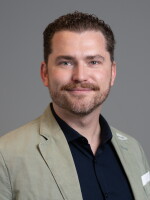
Pensacola Mayor D.C. Reeves is trying to revive a stalled Hurricane Sally housing repair program after the City Council this month rejected a plan to shift $5.8 million in disaster relief money to port infrastructure — a move that drew sharp criticism from residents who said the city’s priorities too often favor downtown projects over working-class needs.
At a Tuesday press conference, City Administrator David Stafford said Reeves has escalated talks with state and federal officials in hopes of salvaging at least part of the grant for housing, even after city staff told council members they had been warned there was “0.0 chance” of an extension.
“The mayor has been working diligently: working the phones, not taking ‘no’ for an answer, talking directly to the Florida Secretary of Commerce and senior leaders,” Stafford said. “... He’s going to be speaking to HUD officials this week during his trip to Washington to see if there’s any path forward that would allow us to spend at least some of those disaster recovery funds on housing."
The last-minute push came after an emotionally charged council meeting on Jan. 15, where residents described lingering Hurricane Sally damage, displacement and financial strain — and questioned how the city could lose track of a grant that was marketed as a major win for storm victims.
Sarah Brummet, a homeowner who said her family lived with storm damage for months before repairs began and then faced six months of displacement, told council members they ultimately sold their home at a loss.
“We struggled to survive in this city — paying for a house we couldn’t live in, trying to give our children stability,” Brummet said. “... It saddens me to learn that there could have been a program to help families like mine access critical funds for necessary repairs, and it angers me that making sure these funds were taken advantage of and distributed was not a priority for this city.”
Brummet contrasted that failure with the city’s bandwidth for marquee initiatives.
“That stands in stark contrast to what is a priority — projects like redeveloping Baptist Hospital, reimagining Palafox Street, and others,” she said. “This city needs to move heaven and earth to serve the people it was elected to serve — not wealthy elites.”
How the city says it got here
The funding at the center of the dispute is part of the federal Community Development Block Grant–Disaster Recovery program, commonly known as CDBG-DR — a pot of HUD money that Florida administers through its Department of Commerce. The $5.8 million award was intended to help low- and moderate-income households repair or replace storm-damaged homes.
At the council meeting, Deputy City Administrator Amy Miller told council members the housing program never became operational because required planning work stalled amid turnover in the city’s housing department.
“We realistically never got off first base,” Miller told council members.
She said the city needed an approved implementation plan, budget and timeline before it could even begin taking applications. But, she said, the staff member with expertise in the program left before the plan was submitted.
“And that’s why we are where we are,” she said, “which is either send the money back to the federal government or reallocate it to other disaster recovery projects that had already been approved to keep the funds in the local community, even if in a different way than originally intended.”
Reeves proposed moving the funds to infrastructure repairs at the Port of Pensacola, including road and rail rehabilitation that port officials said was necessary to address Hurricane Sally damage.
But several council members said the city was asking them to ratify a major change at the 11th hour — after months of assuming the housing program was moving forward.
Council’s backlash
Councilman Charles Bare led opposition to the reallocation, calling it a failure to honor what residents were promised.
“I will not be supporting this bait and switch,” Bare said.
Bare questioned why the city did not seek outside help sooner as staffing problems mounted. Deputy City Administrator Amy Miller said the city was told by Florida Commerce that its only options were to return the money or reallocate it to already-approved Hurricane Sally projects.
Councilwoman Jennifer Brahier said she was unwilling to move the funds without first exhausting every remaining option to use at least some of them for housing.
“I don’t want to touch it until I know for a fact there’s nothing else we can do,” she said, adding that the proposal carried unavoidable optics. “I don’t know how you get away from the optics.”
Councilman Delarian Wiggins said the situation was especially frustrating given unmet housing needs in his district, while Councilman Jared Moore argued the city should avoid sending $5.8 million back if housing was no longer viable.
“I’d have a hard time just sending it back,” Moore said.
Council President Allison Patton said the city owed residents a full effort to salvage housing assistance, even if success was unlikely.
“I think we’ve let folks down,” she said.
The proposal ultimately failed on a 4–3 vote, with only Moore, Teniade Broughton and Casey Jones voting in favor of the reallocation.
The port’s role — and the optics fight
The proposed reallocation landed at the Port of Pensacola as Reeves continues to advance a “both-and” vision for the waterfront — the idea that a working, industrial port can coexist with, and even reinforce, downtown-adjacent redevelopment, rather than being displaced by it.
That framework underpins the administration’s broader port strategy, which is now reaching a critical moment. City and port officials are preparing to appear before the Triumph Gulf Coast board this week to advance a proposed $76 million grant for shipbuilding facilities at the port — part of a roughly $275 million public‑private project that backers say could generate up to 2,000 jobs, many of them blue‑collar positions tied to advanced manufacturing and maritime construction.
Under that strategy, the city has pursued a mix of uses at the port: traditional cargo and industrial operations alongside selective, high‑profile partnerships meant to signal capacity, visibility and ambition. Administrators have repeatedly characterized the city’s relationship with American Magic — the New York Yacht Club–backed sailing team operating at the port — as a small but strategic piece of that puzzle, helping position Pensacola nationally as a serious maritime hub rather than an isolated or declining port.
Port officials told council members that the Hurricane Sally funds under discussion were tied specifically to storm‑damaged infrastructure — including road and rail systems critical to heavy industrial use — and to projects serving businesses located in low‑ and moderate‑income areas.
“This has nothing to do with American Magic,” Shep Coggin, Port Commercial Development & Seaport Security Manager, told council members.
Even so, the symbolic stakes proved harder to disentangle from the technical ones. To critics, the idea of moving housing repair dollars — originally promoted as a lifeline for storm‑damaged families — to port infrastructure collided with the imagery of elite sailing and waterfront redevelopment, regardless of whether the money could legally be used for anything else.
That symbolism has taken on added weight as Reeves heads into an election year in which affordability, displacement and trust in City Hall have emerged as central themes. During the council meeting, Jasmine Brown — a Party for Socialism and Liberation candidate for mayor — framed the stalled housing program as emblematic of misplaced urgency.
“The people of Pensacola understand priorities,” Brown said during public comment. “We see fast action for downtown beautification. We do not see urgency for working-class housing repairs.”
Brown’s critique reflects a broader current in the race. Other challengers, including Jermaine J. Williams, who is running on a “people-first” platform, former City Council President Ann Hill and Alicia Trawick, a disaster-recovery consultant calling for structural changes to city government, have all emphasized transparency, housing stability and skepticism toward large redevelopment deals — framing decisions like the proposed reallocation as tests of whose interests City Hall ultimately serves.