“Road to Revolution,” a new exhibit commemorating the 250th anniversary of the American War for Independence, is now on display at the Pensacola Museum of History. The exhibit highlights the pivotal role Pensacola played in determining the outcome of the American Revolution against the British.
It’s important to note that throughout the American Revolution — until the pivotal Battle of Pensacola in 1781 — West Florida was a British-held loyal colony.
“Really, this exhibit is taking visitors through what it was like to live here 250 years ago and kind of what everyday citizens would have been experiencing.”
This is Jessie Cragg, chief curator for the University of West Florida Historic Trust, beginning a tour of the exhibit.
“When the British came in in 1763, they commented that the old Spanish fort that was here was in terrible condition. It was falling down. There were holes in the walls. So they spent the next couple of years refortifying and building up this space. They presumably would have put up new fort walls.



The replicated fort walls use rounded pine logs, about eight feet high, with pointed tops.
An adjacent mural by Pensacola artist Herbert Rudeen depicts the diversity of the people who lived in Pensacola and British West Florida, which at the time stretched from Apalachicola to the Mississippi River.
“There were not only British soldiers and their families, there were Native Americans, mostly Creek, but a lot of Chickasaw and Choctaw as well," said Cragg. "We have some men, who were obviously going to the back country for trade goods. We have a lot of Europeans coming in and out. We have people of color, of African American
descent."
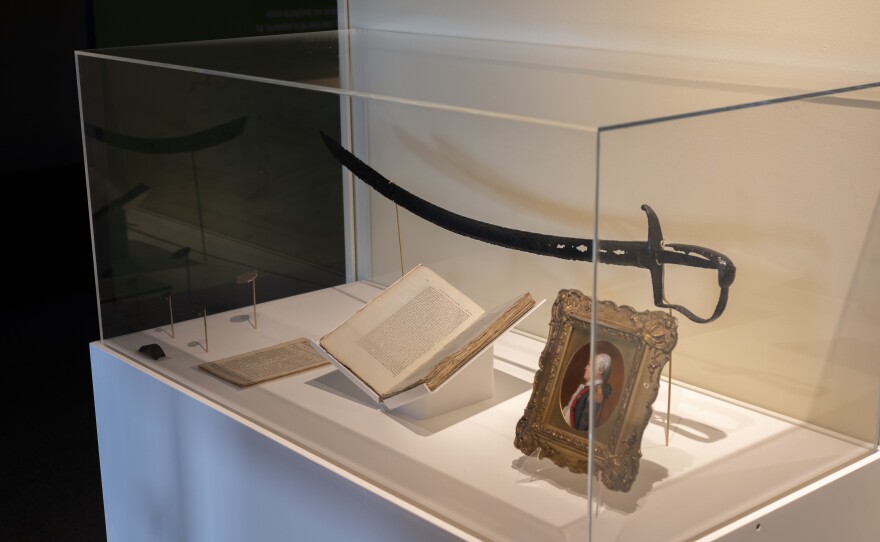
Pivoting around, there’s more evidence of British Pensacola, including documents on loan from Parker Destin, a 1767 map showing how the British plotted the town, and a piece of the original fort block house.
“This was excavated just in front of where the Voices of Pensacola building is today, so on Government Street. So it would have been the northwest block house for the fort and this is probably a piece of one of the foundation posts," she said, adding that they also have a piece of Fort George, which the British built to defend the town.
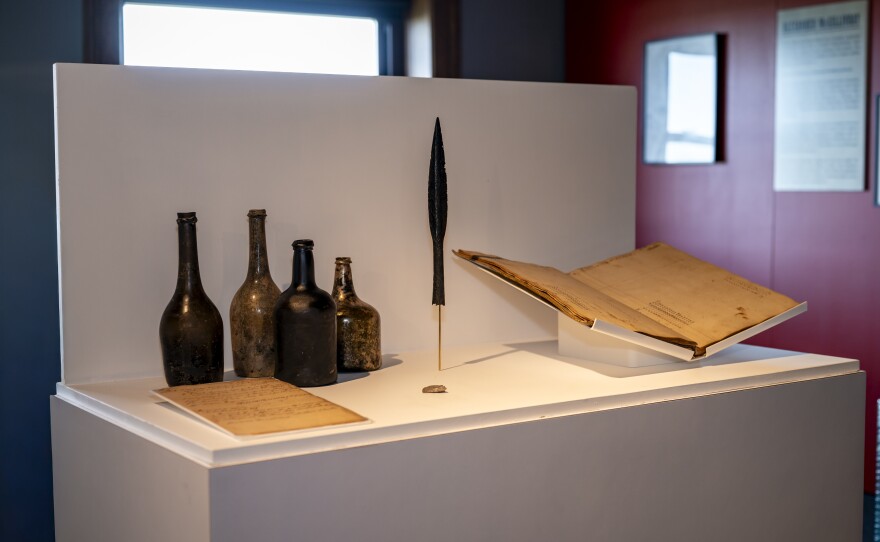
There are some household items on display as well, such as a piece of a ceramic teapot, a candlestick, and wine glasses.
The exhibit also includes a life-size depiction of a colonial Pensacola house from the period.
This focuses on the story of Elizabeth Digby Pilot, who Cragg notes was one of only two known women to record their thoughts and leave them behind that we can read today of
living in British West Florida.
Pilot was the wife of a British military officer. A digitized version of her diary is on display, and visitors can hear a UWF student narrating what she wrote about her time in Pensacola.
"She goes into incredible detail, everything from “It was 99-and-a-half degrees today” to what the streets were like and the people that were here and all of the hardships she faced.
Here's an excerpt of Elizabeth Digby Pilot's diary:
"We suffered much from the heat and other causes. Vermin infests the place and a constant smell preceded from a disagreeable weed which had overrun the ground. The reflection on the sun from the white sand was painful on the eyes. The soil was barren and not a blade of grass could be seen. Had it not been for the sea breeze, it would have been impossible for us to have existed.”
Moving from here, there’s a segment focusing on the “Borderlands” aspect of British West Florida, a valuable trading post that grew out of a robust trade relationship with Native Americans and a thriving deep-water port bringing in goods from the Caribbean.
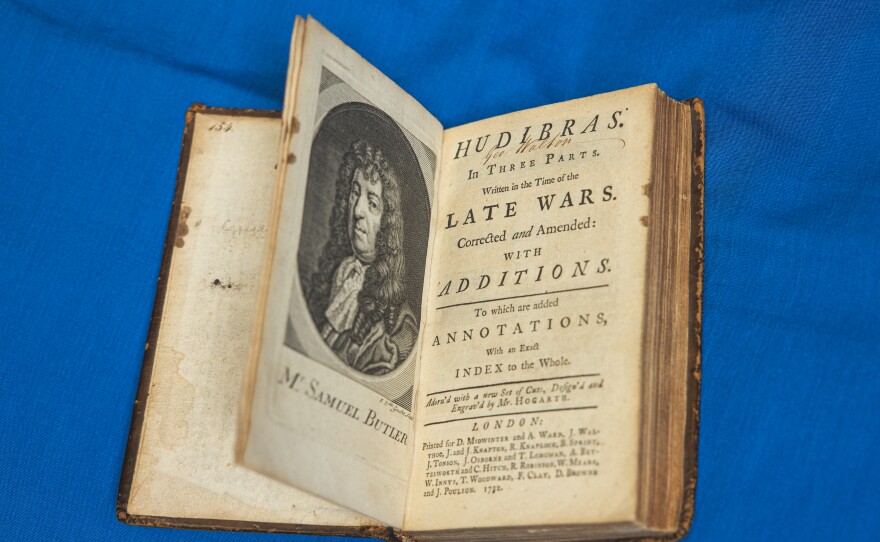
For example, the number one product coming in and going out was rum, with a log book showing over 7,000 gallons of rum in just two years by one merchant.
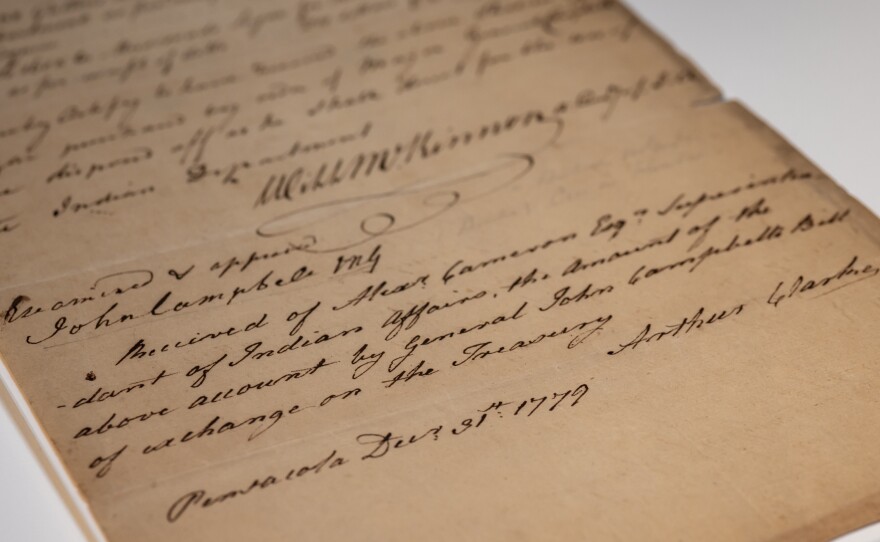
"But, this is my absolute favorite piece in the gallery and it really proves just how important Pensacola was," said Cragg referencing a letter written and signed by Benedict Arnold, widely considered America’s most infamous traitor, before he turned his coat.

"And, in this letter he is writing to Richard Peters, the secretary of the Board of War and it’s in 1777 and he is saying, 'If we want to keep this momentum going, I think we should consider seizing some areas along the Gulf of Mexico, notably Pensacola,' because the British hold it," she explained. "But it’s an important strategic location and if we could capture it for the colonists, it would cut off that British supply route.”
In the end, Cragg says the American leadership at the time opted against Arnold’s plan to come in from Orleans and attack Pensacola from the west.
But, four years later, enter Spanish General Bernardo de Galvez.
The exhibit includes an enlarged painting depicting Galvez and his diverse military force attacking the British forces in Pensacola.
Near the Galvez display, visitors can view almost four-minute segment of the Ken Burns documentary, American Revolution.
The film explains Galvez's decision to enter the fray and details how his army laid siege to Pensacola for a month-and-a-half before a shell hit the British gunpower magazine on May 8, 1781 and killed almost 100 British troops.
The clip explains the significance of the Battle of Pensacola to the larger war.
“West Florida is the first non-rebelling colony that Britain loses," said Kathleen Duval, a history professor at the University of North Carolina, who was interviewed for the documentary. "After the Spanish victory at Pensacola, many, many people in Britain think it’s time to stop this war before it gets any worse."
Rob Overton is executive director of the UWF Historic Trust, which developed the exhibit in partnership with America250. He reiterated this part of the story of the American War for Independence hasn't always been told.
"But we’re starting to see now people are picking up on it, looking at the broader aspects of the American Revolution," he said. "And this exhibit was a way for us to share that, not only with our local people, but the boarder American community."
Although closed for the July 4th weekend, the exhibit will remain on display through May 2027 at the Pensacola Museum of History, which is open Tuesday through Saturday from 10 a.m. to 4 p.m. and on Sundays from noon to 4 p.m.
For more information visit historicpensacola.org.