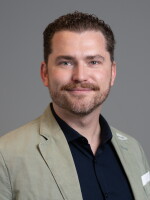
The University of West Florida Board of Trustees voted Thursday to advance interim President Manny Diaz Jr. as the university’s next president, sending his appointment to the Florida Board of Governors for confirmation and capping a yearlong leadership transition that reshaped UWF’s governance.
Trustees approved Diaz’s appointment by an 11–1 vote, with faculty representative Heather Riddell casting the sole dissent. The board also authorized its chair to execute Diaz’s employment contract, which includes a compensation package that could approach $1 million annually, pending performance bonuses.
Diaz will continue serving as interim president until the Board of Governors considers his appointment, which trustees said is expected at the board’s Jan. 29 meeting.
Faculty objections
While the vote itself was decisive, the process leading to it drew sharp criticism from faculty and one trustee.
During public comment, Dr. Amy Mitchell-Cook, vice president of UWF’s Faculty Senate, urged trustees to reopen the search, calling the one-candidate outcome “a failed search.”
“If the search truly produced only one worthy candidate to bring to campus, then it should be considered a failed search,” Mitchell-Cook said. “If, however, there were other worthy candidates, then the perception is that the search was predetermined or flawed.”
Mitchell-Cook cited a Board of Governors regulation requiring search committees to advance more than one qualified applicant absent exceptional circumstances — circumstances she said had not been articulated. She warned that bypassing that process could expose the university to legal risk.
Separately, during the board’s interview with Diaz, Riddell raised questions about how the university would safeguard academic freedom, intellectual diversity and faculty research interests amid heightened political scrutiny of Florida’s public universities.
Diaz responded by pointing to the board’s statement of institutional neutrality and said his administration would support academic freedom in the classroom while complying with state law.
When it came time to vote, Riddell said her decision to oppose advancing Diaz was based on the search itself, not on Diaz’s qualifications or his responses during the interview.
“I’m not voting against interim President Diaz and the work he’s done,” Riddell said. “I’m going to be voting against the process that led us here.”
Diaz’s vision for UWF
In a public interview with trustees, Diaz outlined a vision focused on expanding UWF’s regional presence, strengthening military partnerships, using athletics as a branding and enrollment tool, and more aggressively pursuing new revenue streams.
A central pillar of Diaz’s agenda is closer alignment with the military installations surrounding Pensacola and the western Panhandle, including Naval Air Station Pensacola and Eglin Air Force Base. He said one of his first actions as interim president was consolidating UWF’s military and veteran programs under the president’s office.
“We wanted to make sure it is a clear message to that community that UWF is here to serve that population,” Diaz said.
He described ongoing efforts to position UWF as a direct partner to those installations, including discussions that would have UWF’s College of Education help train Air Force instructors.
Diaz also emphasized the need for UWF to be more visible beyond its main campus, arguing the university must actively engage downtown Pensacola and communities across the Panhandle rather than waiting for students and partners to come to it.
Athletics — particularly football — featured prominently in Diaz’s remarks as part of that outreach strategy. He described sports as both a student-retention tool and a highly visible “front door” for the university.
Fundraising, Diaz told trustees, is a core responsibility of the presidency. He said UWF must expand its donor base geographically and pursue state and federal funding more aggressively, leveraging relationships in Tallahassee and Washington, noting that the university’s primary financial lifeline comes from the state legislature.
He also said the university should rely more heavily on public-private partnerships to accelerate development of student housing, research space and other infrastructure, rather than depending solely on traditional bonding.
Diaz also acknowledged the risks of rapid growth, saying expansion must be balanced against preserving UWF’s identity.
“There’s a certain point where you can lose your identity,” he said. “We have to grow responsibly.”
A year of political upheaval
Diaz’s appointment follows a turbulent year for UWF that began when Gov. Ron DeSantis appointed several new members to the Board of Trustees, shifting its ideological balance.
That shift was followed by the resignation of former President Martha Saunders and the selection of Diaz — a former Republican legislator — as interim president.
Those moves prompted significant local backlash, including the formation of the Save UWF campaign, as faculty, alumni and community leaders raised concerns about perceived political interference in the university’s governance.
Thursday’s vote to advance Diaz unfolded within a broader effort by the governor to reshape leadership across Florida’s public university system.
Charter schools and academic concerns
Trustees also questioned Diaz about his interest in making UWF a charter school authorizer — an issue that has drawn heightened scrutiny given Diaz’s long ties to Florida’s school-choice and charter-school movement.
In Florida, charter schools operate independently of traditional public school districts, and institutions that authorize them hold significant power over approval, oversight and funding — making the question of who serves as an authorizer a flashpoint in state education policy.
Before coming to UWF, Diaz served in the Florida House and later as state education commissioner under Gov. Ron DeSantis. He also previously worked for Doral College, an institution closely associated with the state’s charter-school sector — ties that faculty critics and some community members say warrant added transparency if UWF expands into charter authorization.
Diaz said UWF has been approached about hosting a small, philanthropically funded, no-tuition private school on campus as a pilot program, separate from any charter authorization.
“That is not a charter school,” Diaz said.
Separately, he said UWF is preparing an application to the Florida Department of Education to become a statewide charter authorizer, which could generate revenue through administrative fees. He said any on-campus school would function as a laboratory for teacher training and research and would not undermine partnerships with local public schools.
“Anything we would do would be in collaboration with them,” Diaz said.
Contract terms and compensation
Alongside the appointment, trustees approved Diaz’s proposed five-year employment contract, following brief discussion.
Under the draft agreement, Diaz would receive a base salary of $674,000, with eligibility for an annual performance bonus of up to 16%, or $107,840, based on goals set and approved by the board. If the full bonus is awarded, total compensation in 2026 would reach $946,040.
The package includes a $60,000 housing allowance, a $14,000 auto allowance, and a $1,200 phone allowance, in addition to standard executive benefits. The contract also includes retention incentives of $375,000 after three years and $150,000 after five years, with Diaz’s seven months as interim president counting toward those milestones.
During discussion, Riddell questioned how the contract ensures accountability beyond the discretionary bonus, noting that the base salary and retention payments are not directly tied to university performance.
“So none of the compensation is based on the performance of the university,” Riddell said.
Board Chair Rebecca Matthews responded that accountability is embedded in the board’s authority to set annual goals, award bonuses and terminate the contract if necessary.
After the vote, Diaz emphasized that his contract does not include a step-down provision, which can allow departing presidents to move into a paid faculty role.
“I’m here to do this job,” Diaz said, “and when the job’s complete or when this board no longer sees fit, then I will move on.”
The board may terminate the contract by a two-thirds vote. A termination without cause would trigger 20 weeks of severance, while a termination for cause would result in 30 days of pay.
What comes next
Diaz’s appointment will be forwarded to the Florida Board of Governors for consideration later this month. If confirmed, Diaz would assume the presidency as UWF navigates enrollment growth, major capital projects and the political pressures reshaping Florida’s public universities.