

In high school marching band, there is no room for interpretation. Uniformity and precision is key to delivering a good performance.
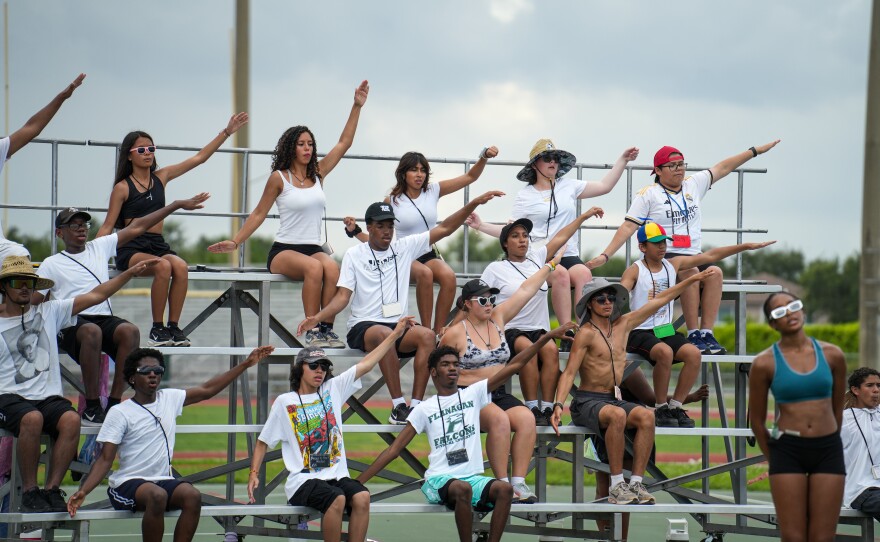
"Why do I have so many interpretations of this step side?" Will Cobos shouted over the noise of a metronome to members of the Falcon Sound, the competitive marching band at Charles W. Flanagan High School in Pembroke Pines.
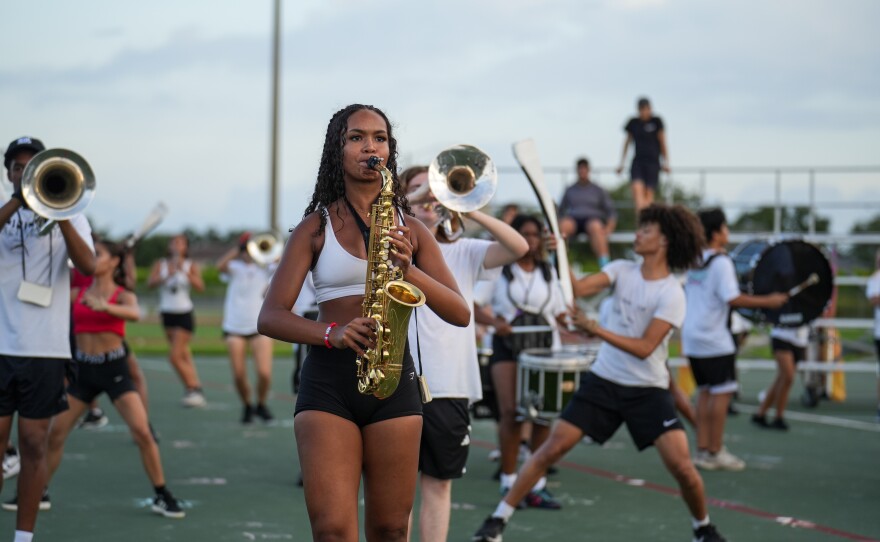
It was a hot and humid July morning when Cobos, the band's visual technician, and dozens of students are gathered at the school's green-colored outdoor basketball court, kicking off what would be a 12-hour day of band camp. Yes, 12 hours.
"You're flexing down your heels every step, keep that heel height the same, gotta step small, gotta step small," Cobos instructed the band as they lined up in rows, warming up without their instruments.
The students were already sweating an hour into practice as they shouted their "three, six, nine" count, shuffling across the concrete floor.
READ MORE: The Overtown Youth Center expands its program model to south Broward County
" Right now they're doing visual basics. So, getting their heads in the game ready to do the actual drill forms on the field later," said Shelby DeVore, director of bands at Flanagan High. "[The students are] working certain muscles that you use while you're marching."
Come this 2026-2027 academic year, the sweat and exercise put into marching band could help students toward graduation.
Thanks to a new Florida law that went into effect July 1, high school students can now satisfy both their arts and physical education credits at the same time if they're in marching band for two years.


"People just think that we hold an instrument and walk around a field for eight minutes, but it's a lot more than that, it's taken me at least four years to get my technique right," said 16-year-old junior Hannah Zumbach, who plays the euphonium. "Not only are we moving, but we're also playing, so I think it's pretty cool that they're actually doing this for us."
Zumbach will benefit from the new law. She has not been able to take P.E. classes, so her three years of marching band so far will pay off.
" We do some [physical training] out here. We train our bodies. We get some cardio in to make sure that we're fit enough to march an entire like seven-minute show," said 17-year-old senior Khaleb Baptiste. "It's as physical as some sports."
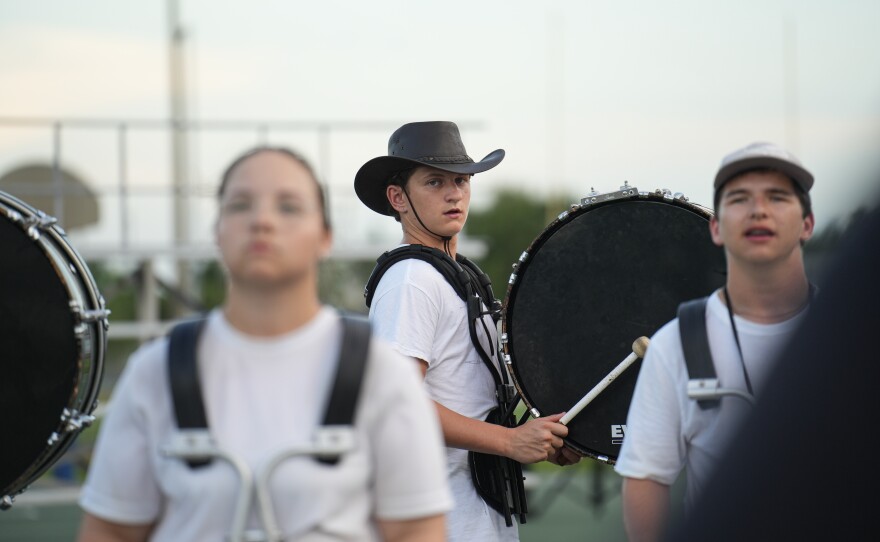
Baptiste plays one of the larger instruments in the marching band, the contrabass bugle, which can range from 20 to 30 pounds. Aside from being part of the Falcon Sound for three years, he has also participated in the school's track and cross-country teams.
"It's a huge instrument, so it's very hard to do sometimes," said Baptiste. "But it's nice to push through it and then make beautiful sounds."


What it takes to be in marching band
The award-winning Falcon Sound marching band has four main components. There's the wind instruments — like flutes and saxophones, the drumline and the front ensemble, which includes the marimbas and xylophones.
The color guard is the non-musical portion of the marching band, and involves more dancing and the use of equipment like flags and mock rifles.
Flanagan High's three week band camp helps each group practice their skills during the summer break. Their days start at 8 a.m. and end at 8 p.m. — using the morning and evening blocks to exercise and practice outdoors.
When the scorching summer heat is at its peak, between 11 a.m. and 4 p.m., students stay indoors practicing the music.
"They're learning how to get better at the technique, they're improving in their body control, their music is getting better," said Valerie Figueroa Alvarez, the visual caption head for Falcon Sound. "They get more resilient every time we see them."
Figueroa Alvarez has overseen the physical fitness aspect of the program for five years as a volunteer. Her full-time job is physical therapy and an occupational therapist recruiter.
" I literally see what they do every time they're out here on the physical side of things, and it is on par, if not pretty right there with what they're doing in a phys ed class," said Figueroa Alvarez. "I think it's awesome that they're getting credit for all the work that they're putting in during the summer."
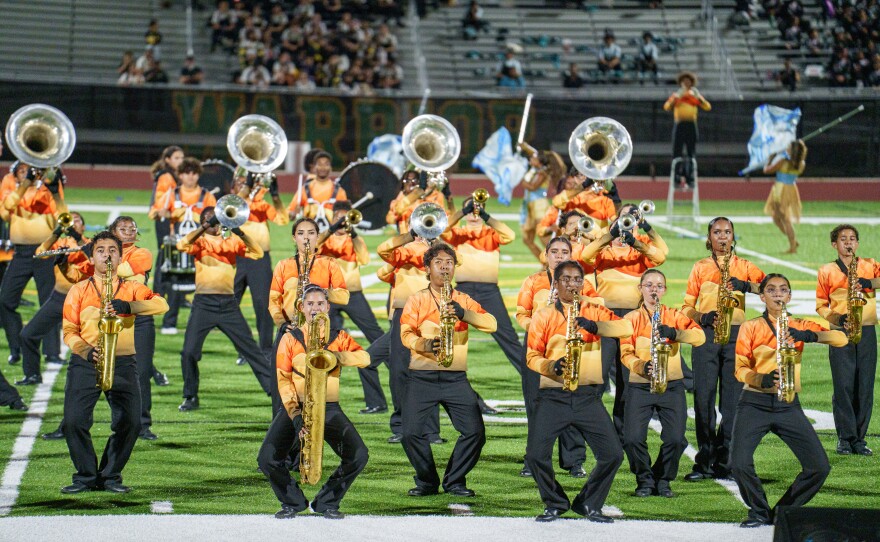
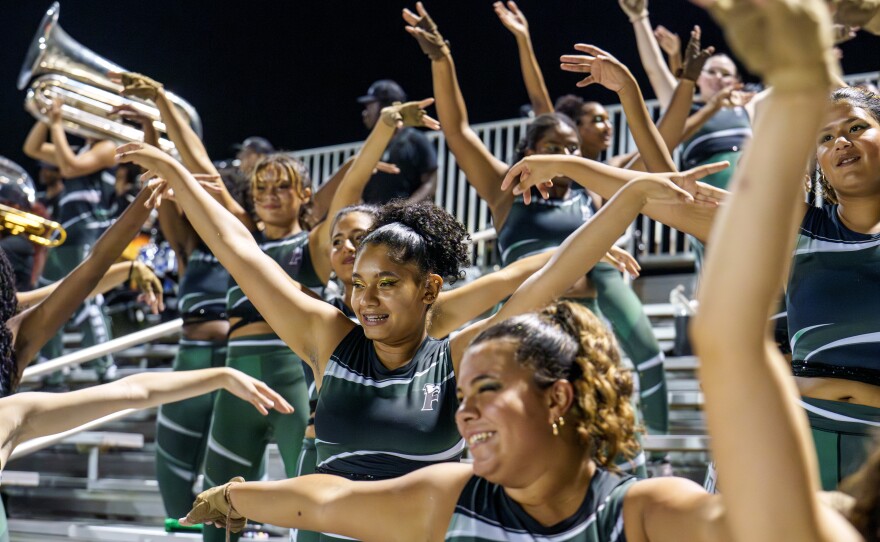

A sentiment echoed by students and faculty is that marching band is not just an academic endeavor, but a mental one. It's what got the Falcon Sound third place at a regional Florida Marching Bands Championship contest last year, for their piece titled "Journey to Oasis."
" It's part of the culture of the school," said Brad Fatout, principal at Flanagan High School. "Our students understand the importance of our marching program as well as our performing arts in general, and they embrace it, they enjoy it, and then the community outside in Pembroke Pines and beyond … they also support it."
For the adults leading the program, many who themselves were in marching band in high school and beyond, the new law has been a long time coming. They expect more student enrollment into the program.
"For kids who might not be all that interested in sports, but they know that they love band, this gives them an opportunity to be physical and to be healthy while still doing something that they love and making music together," said DeVore.
As for the marching band students themselves — it's credit that they think they deserve, both literally and figuratively.
"People think that I'm just tossing something and it's so easy and I could do it the second that I pick it up," said 17-year-old junior Evelyn Posada, who has been in color guard for four years. "We at Flanagan, we really refine our technique and we refine your presence. It's taught me how to present myself and how to hold myself with confidence that before I didn't."
Copyright 2026 WLRN
