A developing El Niño over the Pacific is expected to play a major role in shaping weather conditions across Florida and much of the country during the summer months.
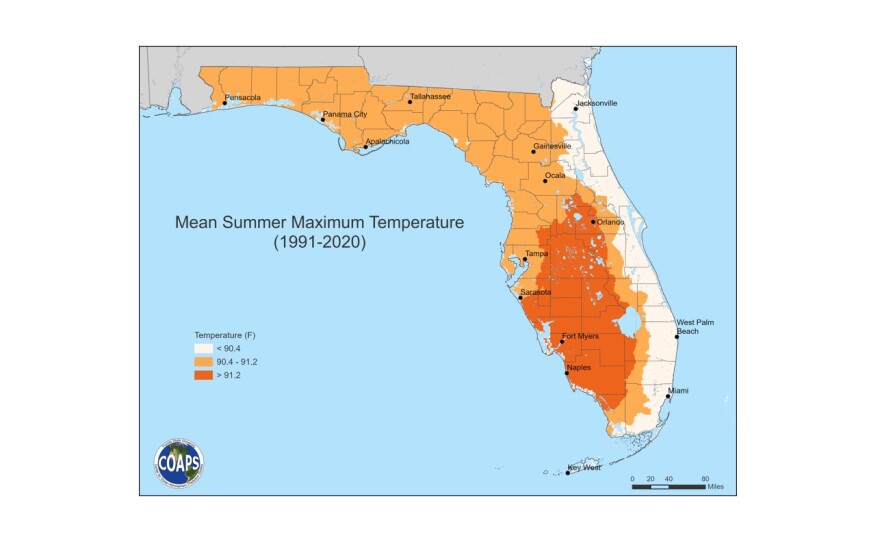
During June, July and August, forecasters expect above-normal temperatures across nearly the entire United States, including much of the Southeast.
The highest confidence for significantly above-average temperatures appears centered over the Pacific Northwest with no area across the Lower 48 in store for a cooler than average summer season.
On the precipitation front, Florida and much of the South is expected to return to more of an average pattern after time periods of both deluges and droughts over recent weeks.
The seasonal outlook shows wetter signals focused over the Northeast and Southwest - likely caused by an enhanced monsoon season across the Four Corners.
![]NOAA summer precipitation and temperature outlook for 2026.](https://npr.brightspotcdn.com/dims4/default/d8fd285/2147483647/strip/true/crop/1057x412+0+0/resize/840x328!/format/webp/quality/90/?url=http%3A%2F%2Fnpr-brightspot.s3.amazonaws.com%2F2a%2Fd2%2Fe3bddb514e52a3698f11d5591358%2Fseasonal-outlook.jpg)
Average summer rainfall across Florida typically ranges from more than foot across the Florida-Georgia border region to between 2 and 3 feet over western and southern parts of the peninsula.
Climatologically, June is typically the wettest month of the year for cities along the Interstate 10 corridor, with some locales in Central and South Florida not seeing their rainiest period until August or September.
Daily thunderstorm activity often leads to the Sunshine State being named the “lightning capital of the U.S.” However, the amount of lightning can vary depending on whether El Niño or La Niña is in charge.
During drier years, the state often gives up its status for the most lightning strikes to states such as Oklahoma and Texas.

What is unknown is if there will be any type of tropical activity which can skew seasonal outlooks.
A landfalling tropical cyclone can lead to well above average rainfall totals while also producing stretches of below-normal temperatures due to the associated cloud cover and wet weather.
But with a strengthening El Niño helping shape global climate patterns, the odds of a direct impact from a tropical cyclone are considered to be low during the 2026 hurricane season.
Experts from both NOAA and Colorado State University expect the hurricane season to feature below-average activity, with increased wind shear and less favorable water temperatures taking a bite out of cyclone energy.

Meteorological summer begins on June 1 and runs through the end of August, while the first day of astronomical summer will begin on June 21 or what is otherwise known as the summer solstice.