

May 23 is World Turtle Day, and if there is anyone celebrating that day, it’s Dr. Katrina Phillips. She is a senior marine scientist at the Dauphin Island Sea Lab who specializes in sea turtles.
Phillips, who is also an assistant professor at the University of South Alabama, is currently researching the early life stages of sea turtles. The Dauphin Island Sea Lab (DISL) is a hub for marine science research in the Gulf region. The Sea Lab is home to the Alabama Aquarium, which showcases the habitats of coastal Alabama.
We spoke with Phillips about her work with sea turtles and how we can better protect the endangered species. This interview has been condensed and edited.
It's sea turtle nesting season. What are some tips for beachgoers so that they don’t interfere?
Phillips: There are small things you can do when you're on the beach that could actually have a big impact on sea turtles. One thing is not to leave any beach furniture or tents out overnight because the turtles come up to nest overnight. I've seen turtles get tangled in something left out overnight, or they might just see it and (think) this isn't a safe place and turn around. So, you're actually preventing turtles from nesting. Another thing is, for whatever reason, people love digging big holes in the beach, which I guess is fine. But when you're done with that, please fill it in, both for human safety and for sea turtle safety. Sea turtles can crawl up and fall in there. Even smaller holes could be a hazard for a little hatchling. And then at night, please no lights on the beach. That includes flashlights. Also, if you're staying in a place that's on the beachfront, if there are any outdoor lights, or even indoor lights with your curtains open, that can also be a deterrent. Both for turtles to come to nest, or it could disorient hatchlings, and they might walk towards the light instead of towards the ocean, which gives them more time for predators to be able to find them. So, lights off, flat beaches, and not leaving stuff out on the beach.

What kind of data is collected during nesting season?
Phillips: Sea turtle researchers can get a lot of information from female turtles when they come up to lay eggs, but male turtles, once they leave the beach, don't come back to the beach again. So, we have very little idea what the males are doing. Females come back every two or three years to lay their eggs. We don't know if the males come back to try to mate with the females that come to where they were hatched. There's a lot we don't know about male sea turtles in general. It's very difficult when turtles are living in all these different places, and in the water, we can't just go out and count them. We have estimates of how many turtles are out there. We can use nest counts to guess. One year is based only on the turtles that are nesting that year, because it's not all the turtles. And there’s turtles laying more than one nest, so you have to kind of calculate. There's a lot of math involved in trying to figure out how many turtles we think are even out there. We can track the nest counts year to year and see what's going on. For loggerheads, it's been pretty stable for many years now. It's actually a good news story for green turtles in Florida and along the Gulf. There have been more green turtle nests in the last 15 to 20 years than there were before that. And it is probably related to the Endangered Species Act. Green turtles used to be fished for their meat. There was a direct fishery for green turtles. And after the Endangered Species Act passed in the 70s, you weren't allowed to catch them like that anymore. And now, 30, 40 years later, when turtles from that time will be reaching maturity, we're seeing an increase in the nest counts and going up and up.
Listen to the Sea Lab Sidebar Podcast about Sea Turtles
You can learn about turtles and other marine life at the Alabama Aquarium. Why is it important to have this kind of access for people to see these animals and to learn about them?
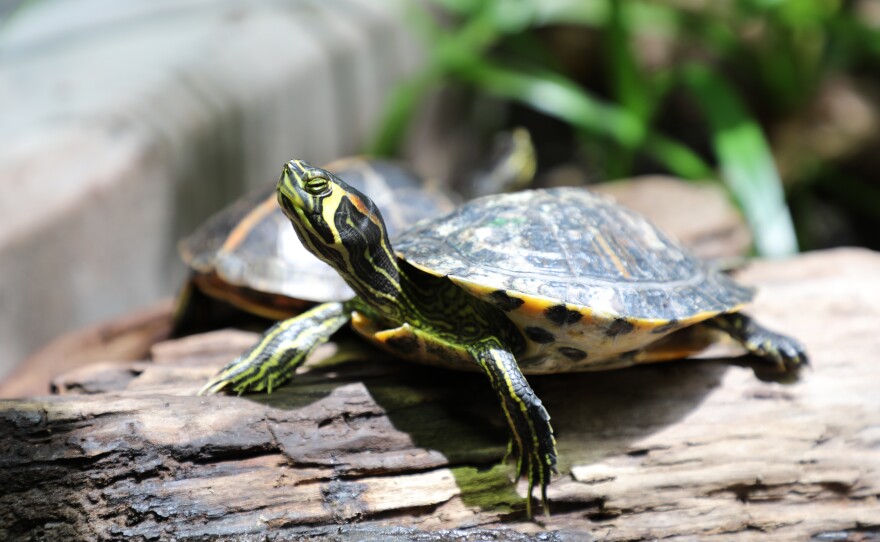
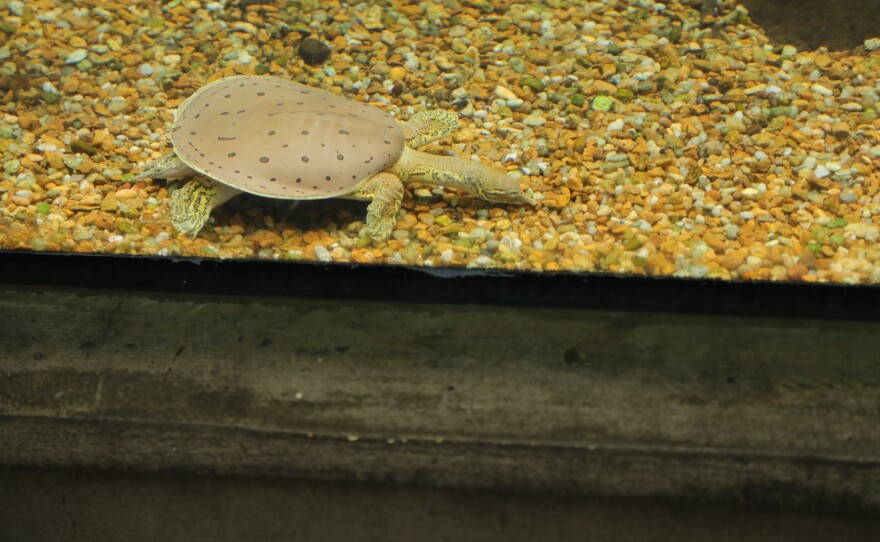
Phillips: I think it's really important for people to understand the environments that they're living in and what's impacting (the wildlife) that live nearby them. And in terms of turtles, it’s helpful to know there are turtles that live on land. There are turtles that live in the water, so if you see a turtle on land, it might not want to live in the water. So maybe you shouldn't put it in the water. And the same goes for turtles in the water. You don't want to move them to a place just because you think that's where they want to live. It's the turtles that are probably already there, or any kind of wildlife. They're probably already where they want to be, so we should leave them, and you can learn more about those different habitats if you come to a place like the aquarium.

Tell us a little bit about the research you’re working on at the Sea Lab.
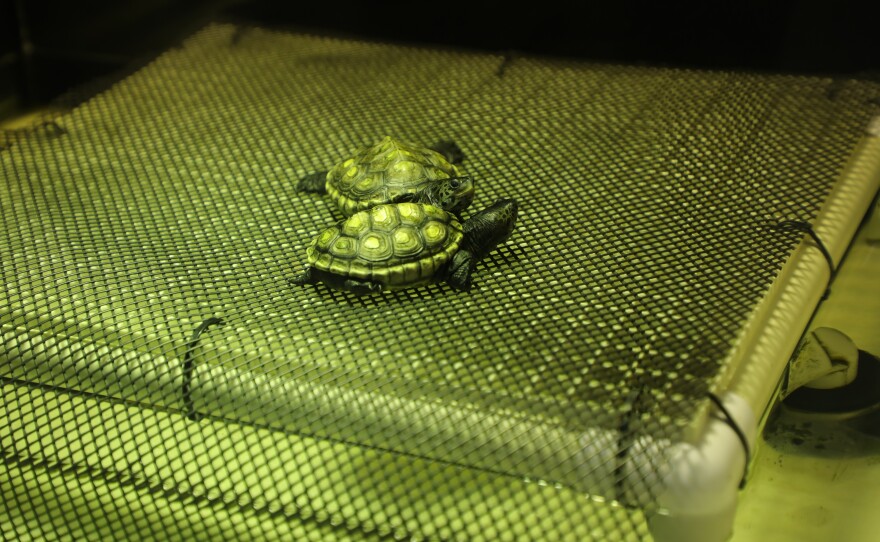
Phillips: I do a lot of work on sea turtles … the part of their lives when they're living in the water. So, I've been researching a lot of the early life stages before they reach maturity, and the different habitats that they live in as juvenile turtles, and how long they live there, and what they are eating there. And I'm part of a study looking at sea turtle DNA, and if sea turtle DNA can tell us a little bit about how they know where to migrate. And I'm also part of another study looking at different ways to determine how old a sea turtle is.
How does the research and the work that is done at the Sea Lab impact marine life?
Dr. Katrina Phillips: So, I specialize in sea turtles, which, among a lot of turtles, are kind of unique because they live in the ocean, and because they are sort of globally recognized as endangered and threatened species. Some of the work that we do is important to understand what those threats are to sea turtles and how we can help mitigate those and have less of a human impact on them. So just in day-to-day life, that might look like trying to use less plastic — even just plastic silverware, or straws, or plastic bags — all the plastic that we can keep out of landfills helps keep that out of oceans and helps keep it out of things that live in the ocean as well.
What do you love about your work?
Phillips: I love that there's so much out there that we still don't know. Everybody loves a sea turtle, and they're so big, and they live for so long, you would think, ‘Oh, well, we must know everything there is to know about them.’ But there's still so much we don't know. I really like that path to discovery of something we don't know.
What should we do if we think a sea turtle needs help?
Phillips: Because sea turtles are considered an endangered species, you're only allowed to approach them if you have special permission to do that. So, if you saw a sea turtle on the beach, or if you saw a sea turtle in the water, you shouldn't approach the turtle. You should leave it alone and give it a lot of space. That being said, sometimes people do accidentally catch sea turtles, maybe when they're fishing on a pier or something like that. In that case, I wouldn't just cut the line and let the turtle go because it probably has a hook in it. Please do report that and get it to the place where it needs to be. (For Florida, that number is FWC's 24-hour Wildlife Alert Number at 1-888-404-3922. And for Alabama, that number is the 24-hour Alabama Sea Turtle Stranding and Salvage Network hotline at 1-866-732-8878)
What are some of your favorite turtle facts?
Phillips: Well, the biggest turtle, any kind of turtle in the world, is a sea turtle, the leatherback turtle. They can be 7-to 8-feet long. They're really big, and all they like to eat is jellyfish. I think it's fascinating how they can power such a big body on just jellyfish. One reason leatherbacks are called leatherbacks is that they have a fatty layer that's almost like a blubber layer, like marine mammals have. And their shell —instead of having a big, hard, bony structure — it's kind of a lot of little bones all locked together, so it can bend a little bit. Their shells are softer than those of what we call the hard-shelled sea turtles. And one reason for that is so that they can dive really deep. They don't really want to be in the shallow water habitats. They want to be in the really deep water habitats where they can dive down and get what they want to eat. There are other things that live in the ocean called pyrosomes. They're really cool, and they can build big colonies.
How should we celebrate World Turtle Day?
Phillips: By being good stewards of their environment. And speaking of celebrations, one thing I will mention is that one way to be good stewards of the environment while you're celebrating is to try to use less balloons, which is a big source of plastic. And especially balloon releases. If there are helium balloons and you let them go, they'll float for a while, but eventually they're going to pop, and they will fall back down either into the land, into the water, and wildlife might eat them. I've seen sea turtles tangled up in balloon strings from balloons that have landed in the ocean. If you're going to use the balloons, please dispose of them responsibly.
Learn more about the Dauphin Island Sea Lab
You can also listen to DISL Learning Minutes here.
